Artworks will be available to be collected or shipped from Koorie Heritage Trust from Tuesday 24 February 2026 once the exhibition has closed.
See our FAQ for more info.
Dominic White (he/him), Trawoolway
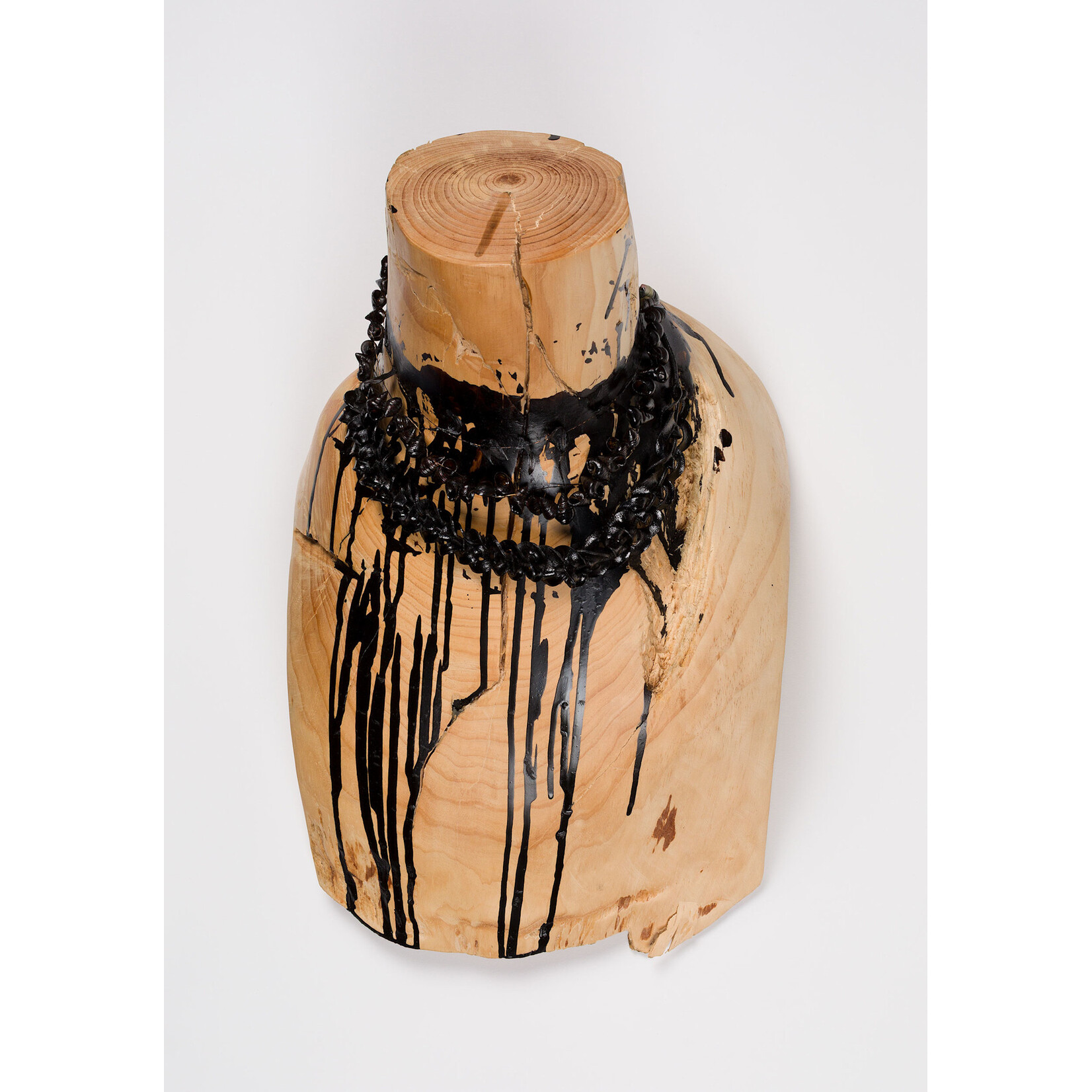
Tar Brush, 2025
wood (Pinus Radiata), bitumen, silver, Maireener shells, kelp, waxed cotton
47 x 28 x 25 cm
“A touch of the tar brush” indicated someone had “Blood” from a non-Anglo group of people. It was a denigration, a way of removing the value of a human’s lived experience, thought system, and way of knowing and being. It indicated that they were less than human, a “stain” in a social imperial context. It was a permanent fault that was unwastable, unchangeable, unclean, and in the blood. This imperial colonial framework has a long history.
This Tar Brush framework intends to degrade all First Nations Art, Philosophy, History, insight, and ways of knowing the world.
For many, it forced the denial of family heritage, identity and history underground. It was safer to go under the radar. In Tasmania, the myth of extinction, the denial of attempted genocide and Aenocide, meant the duality of existing as evidence of survival didn’t fit social expectations. A paradoxical absurdity, heritage was a taint that didn’t exist.
We all need to negotiate this Tar Brush framework. It is built into the Australian power structure. It is internalised within individuals, it permeates the Mob and between families, and it is externalised in the Anglosphere, often for political purposes. It drives the condescending paternalist, the footy bigot rant, or the fascist booing at a Welcome to Country at ANZAC Day.
What can you see beneath the tar stain?